
Revenge of the Queen
SkyHorseSimulation
4.0632.00 Reviews
- Version
- 1.0.34
- Installs
- 100.00K
- Age Rating
- Everyone 10+
Screenshots





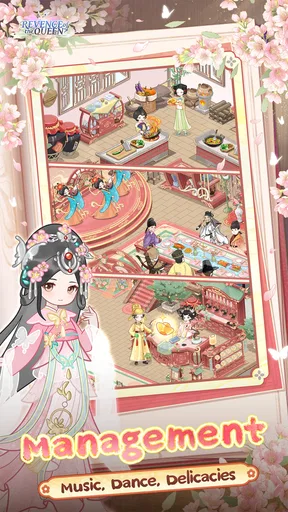


Our Review of Revenge of the Queen
 Analysis by Appyee
I approached Revenge of the Queen as a short-session simulation game with a dramatic premise rather than as a traditional strategy title. The setup is easy to understand: a queen suffers a miserable fate in a previous life and returns with the chance to change what happens next. That gives the game an immediate goal, but the real appeal is in deciding how carefully to move through palace life, relationships, and the consequences attached to each choice.
SkyHorse presents the game as a free experience for players aged Everyone 10+, and it has built a modest but visible audience, with over 100K installs and a 4.0 average from around 6K ratings. Those figures suggest a game that is easy for curious players to try, although they do not replace personal testing. My impression is that it works best when I want something story-led and interactive without committing to a long, demanding play session.
How the palace experience works in practice
I find the palace story works best when I treat each scene as a small judgment call, not a race to reach the next plot point. Reading with an eye for what the queen knows—and what she may be better off keeping to herself—helps me notice risks without assuming every character is either an ally or an enemy. That deliberate approach sets up the next section’s practical routine for following the story.
Readable choices, but a busy story to follow
The strongest part of the presentation is the clarity of its central conflict. I never had to wonder why the queen was acting: survival, revenge, and the desire to avoid repeating a disastrous life provide a simple emotional compass. That is useful for players who prefer a clear narrative purpose instead of an open-ended simulation with no obvious direction.
The game’s structure also makes it natural to pause and think before selecting an action. I found that more important than simply tapping quickly. A decision can feel attractive because it promises immediate progress, while another may be safer for the longer story. Reading the full wording before choosing is therefore a practical habit, especially when playing in a noisy place or while multitasking.
At the same time, palace drama can become difficult to track if several characters, loyalties, and consequences appear close together. Players who have trouble remembering names or following fast-moving social plots may want to take mental notes about who helped, who caused trouble, and which decisions seemed to create a new risk. That small pause makes the experience less confusing than treating every scene as an isolated choice.
I would not describe the game as a quiet visual novel that can be understood without attention. Its appeal comes from the tension between what the queen knows from her former life and what she can safely reveal now. That means the reader has to stay engaged with the situation. If you prefer games that explain every rule through a tutorial and keep the objective visible at all times, this may feel less comfortable.
Navigation favors deliberate play
For me, the most accessible way to approach the game is to use a slow, repeatable routine: read the scene, identify the immediate danger, consider what the queen already knows, and only then commit to a response. This is more reliable than tapping through dialogue just to reach the next screen. The revenge theme rewards attention to context, not merely speed.
That routine is also helpful for younger players within the age guidance. The story is easy to summarize, but the emotional situation is more complicated than the short description suggests. A parent or guardian choosing it for a child may want to discuss the difference between revenge as a fictional plot device and healthy problem-solving in real life. The game’s age label makes it approachable, but the palace conflict still benefits from a little conversation.
One useful approach is to treat each decision as information gathering rather than as a test that must be solved perfectly. I sometimes choose an option because it reveals how the story reacts, then adjust my thinking on a later attempt. This reduces the pressure to predict every consequence on the first try and makes the rebirth premise feel meaningful instead of decorative.
Motor demands and sensory comfort
From a motor perspective, a choice-driven game is generally easier to approach than a fast action simulation. The core interaction does not depend on precise aiming, rapid movement, or complicated controller combinations. That makes it a reasonable option for players who prefer simple touch interaction or who find reflex-heavy games tiring.
However, simple interaction does not automatically mean effortless interaction. Touching the wrong response can change the direction of a scene, so players with limited precision may want to slow down and make sure the intended choice is selected. Playing with the phone supported on a table or held in a stable position can help reduce accidental taps during important moments.
The game is also a better fit for people who enjoy reading than for players looking for a mostly visual or audio experience. The palace setting depends on understanding conversations and motives. Someone with visual fatigue may find longer sessions uncomfortable, particularly if they try to play continuously. I found that short breaks are more useful here than forcing myself through several dramatic scenes at once.
Players with hearing limitations are not automatically excluded by the game’s premise because the essential appeal is carried by the written story and decisions. Still, anyone who depends on audio cues in games should judge the experience by the text and interaction rather than expecting sound to provide the main guidance. Conversely, players who need large text, high contrast, screen narration, or other specific display accommodations should check how the current build behaves on their own device before relying on it as an accessible choice.
Playing in ordinary situations
This is the kind of game I can imagine opening during a commute, while waiting for an appointment, or in the evening when I want a contained story rather than a competitive match. A realistic routine would be to play one or two scenes during a break, stop before making a major decision, and return later with enough attention to remember the political tension. That is more enjoyable than trying to play while answering messages.
Its suitability for public spaces depends on how comfortable you are reading personal or dramatic dialogue around other people. The game’s subject matter is not difficult to understand, but the emotional tone may not be what everyone wants to display on a crowded bus or in a workplace. For private use, the palace setting creates a pleasant escape; for distracted use, it becomes easier to miss why a decision matters.
Because it is free to start, the game is also approachable for someone who wants to test the style without paying upfront. The trade-off is that in-app purchases range from $0.99 to $99.99 per item. I would recommend deciding in advance whether you want to play within the free experience, particularly if the device is shared with a child. The low entry cost is convenient, but the broad purchase range deserves attention before anyone taps through payment prompts.
Where it differs from other simulation choices
Compared with management simulations built around resources, construction, schedules, or production chains, this game places more weight on personal consequences and palace relationships. I do not come to it for spreadsheets or optimization. I come to it to see whether a different decision can help the queen avoid the pattern that destroyed her previous life.
It also differs from action games because the main challenge is interpretation. There is no need to develop fast reflexes to enjoy the central premise. In contrast, players who want constant movement, direct control, or a strong sense of physical progress may find the experience too passive. The simulation label is best understood through the life-and-choice structure, not through detailed city or business management.
Compared with a conventional linear story, the rebirth setup gives my decisions more weight. I am encouraged to question whether a helpful-looking character is genuinely safe and whether a short-term victory creates a later problem. That makes replaying or reconsidering choices more interesting than simply watching the same plot unfold, although the enjoyment depends on how much patience I have for reading and weighing social clues.
Practical strategies for a smoother experience
My first tip is to avoid treating revenge as the only objective. The queen may want justice, but staying alive and preserving room to maneuver can be more valuable than confronting every threat immediately. Thinking in terms of timing helps prevent choices that feel satisfying in the moment but close off better possibilities later.
My second tip is to separate emotional reactions from useful evidence. A character who appears unpleasant may still provide an important connection, while a charming figure may deserve caution. This is one of the game’s more interesting trade-offs: the story invites suspicion, but acting on suspicion alone can be just as risky as trusting everyone.
My third tip is to keep sessions short when concentration is low. If I play while tired, I am more likely to skim a line, forget a relationship, or select an option before considering its wording. The game does not need to be rushed, and a short pause often improves the next decision more than another uninterrupted chapter would.
For players sharing a device, I would also recommend agreeing on who is making the choices before starting a scene. This sounds minor, but a story built around consequences can become frustrating when one person is reading and another taps the response. A shared playthrough works better when everyone understands whether the goal is cautious survival, dramatic experimentation, or simply discovering the plot together.
Remaining barriers and who should skip it
The largest barrier is not physical complexity but dependence on sustained reading and attention. Players with dyslexia, visual processing difficulties, or limited language confidence may need more time to interpret scenes and compare responses. The game can still be appealing, but it is not the best choice if you need very large text, highly adjustable presentation, or a minimal-reading experience.
Another limitation is the uncertainty that comes with story decisions. Some players enjoy discovering consequences through trial and error; others want transparent rules and a dependable path to success. If you dislike repeating decisions or feeling that a choice had an unexpected result, the palace drama may feel unfair even when that uncertainty is part of its design.
The purchase model is another reason to be selective. Free access makes experimentation easy, but optional items can become a concern for families or anyone trying to control spending. I would use device-level purchase protections and decide on a personal limit before playing. That is sensible for any free game with in-app purchases, and especially important when the game’s emotional momentum encourages “just one more” decision.
Players who want a calm, predictable simulation should probably choose a farming, building, or life-management alternative instead. Those games usually offer clearer routines and more visible progress. This one is better for someone who enjoys uncertainty, social maneuvering, and the feeling that a past mistake can be examined from a new angle.
Device fit and current version
The game runs on devices using Android 6.0 or later, and its current version is 1.0.34. That makes checking the operating system a sensible first step before installing, especially on an older phone or tablet. A device that technically meets the requirement may still provide a more comfortable experience if the screen is easy to read and touch input is responsive.
SkyHorse is the developer behind this simulation, and the game’s established audience shows that it is not an obscure experiment with no players around it. Even so, I would keep expectations realistic: the experience is defined more by its narrative premise and choices than by high-end presentation or deep management systems. The right device is the one that lets you read without strain and select responses accurately.
My inclusive verdict
I recommend Revenge of the Queen to players who want a free palace story with a revenge-driven structure, deliberate choices, and a simulation flavor centered on personal consequences. It is particularly suitable for people who prefer reading and reflection over reflexes, and for anyone who likes replaying a situation to understand how a different decision changes the queen’s prospects.
Its inclusive appeal comes from the relatively approachable interaction: there is no need for fast action skills to participate in the central story. But access still depends on readable text, concentration, touch accuracy, and comfort with uncertain outcomes. Those are important practical limits, not minor details. Anyone with specific visual, motor, or cognitive requirements should test the game personally and adjust their play habits rather than assuming that a simple choice interface solves every barrier.
In my experience, the best way to enjoy it is to play in focused bursts, read each response carefully, and see the first attempt as part of learning the palace rather than as a final exam. The free entry point makes that experiment easy, while the in-app purchase range means I would stay alert around optional spending. If that balance suits you, this is a thoughtful choice-based simulation with a clear emotional hook. If you want fast gameplay, transparent systems, or a low-reading experience, another type of simulation will serve you better.
Overall, I see it as a game for patient curiosity. The story’s promise is not simply that the queen gets another chance, but that I get to decide what she does with it. That is enough to make the experience worth trying, provided I approach it as a reflective palace drama rather than a conventional management or action game.
Verdict
Strengths of Revenge of the Queen
- Easy-to-learn controls make it accessible for casual players.
- Frequent events provide extra goals beyond the main storyline.
- Character upgrades offer meaningful long-term progression.
- Colorful visuals and polished animations enhance the overall experience.
- Playable in short sessions, making it convenient for mobile gaming.
Limitations of Revenge of the Queen
- Progress can become repetitive after extended play sessions.
- Some upgrades may require considerable time or resource grinding.
- The large number of menus can feel overwhelming at first.
- Performance may vary on older or less powerful devices.
- Optional purchases can make progression feel less balanced.
Similar Picks in This Category
View All
Truckers of Europe 3
Wanda Software4.3

Town Building Life Simulator
XGame Global4.2

Fidget Toys Trading・Pop It 3D
Freeplay Inc4.7

Sculpt People
CrazyLabs LTD4.4

Scary Teacher 3D
Z & K Games4.2

Hair Tattoo: Barber Shop Game
CASUAL AZUR GAMES4.3
Frequently Asked Questions
What is Revenge of the Queen about?
Revenge of the Queen is a story-driven mobile game centered on palace intrigue, romance, betrayal, and the struggle for power. Players guide the main character through dramatic conversations, political decisions, and relationship choices while uncovering the truth behind her downfall. The decisions you make can influence alliances, character relationships, and how the story develops.
Is Revenge of the Queen free to download and play?
The game can generally be downloaded for free, but it may include optional in-app purchases. These purchases can provide premium currency, special outfits, extra story choices, or other useful items. You can usually progress without paying, although free players may need to wait for energy, tickets, or other limited resources before continuing.
Does Revenge of the Queen require an internet connection?
An internet connection is usually recommended, and some features may require you to be online. Online access can be needed to download story content, synchronize progress, receive events, display advertisements, or process purchases. Because requirements may vary by version and device, it is best to check the store listing before downloading if offline play is important to you.
Are there romance and choice-based elements in the game?
Yes, romance and decision-making are important parts of Revenge of the Queen. You can interact with several characters, select dialogue responses, and make choices that affect trust, alliances, and the direction of certain scenes. Some options may require premium currency or specific relationship levels, so players who want to explore every route may encounter additional limitations.
Is Revenge of the Queen suitable for children?
The game is primarily aimed at teenagers and adults because it may include themes involving revenge, political conflict, romantic relationships, manipulation, and betrayal. The exact age rating can differ between Android and iOS, and content may vary with updates. Parents should review the official rating, in-app purchase settings, and privacy information before allowing younger players to install it.
Play our best games!


